Facebook

Showing posts with label Orthodontic Treatment. Show all posts

Thursday, October 27, 2011

Halloween Can Make Mouths Scary


Muah ha ha ha ha! It's that evil time of year again. A time when oral bacteria feeds on all of the sugar we consume turning our otherwise happy mouths into scary fright zones of plaque-forming ghouls and gobblins.

Now, I always recommend patients completely avoid foods like candy and soda, and use caution when eating hard, crunchy or sticky foods because they can damage orthodontic appliances and braces, bend wires, require extra visits for repairs and even set back treatment time. However, I realize that kids are going to eat candy during and long after Halloween (and I know the adults are sneaking pieces out of the candy bowl too). Because we are kicking off this two-month holiday season with a candy fest, it makes it that much more important that we are all taking good care of our teeth and still trying to eat a healthy well-balanced diet.

So, all of you candy cravers and chocoholics, make sure you are brushing and flossing at least twice a day. When you indulge in a lot of sweets, try to brush right after doing so. If you don't have a toothbrush readily available, rinse your mouth with water a few times. For those of you in treatment, avoid those sticky foods like caramel apples, fruit chews, and licorice - make sure you have extra wax on hand in case anything starts poking you.

As always, eat a lot of fruits and vegetables, especially raw veggies. If you are worried about crunchy fruits and veggies, slice them really thin or blend them into a delicious smoothie. Take a multi-vitamin everyday to ensure you get the Calcium and Vitamin D that you need to maintain strong, healthy teeth and bones. Eat some protein and fiber at every meal. That will keep you feeling fuller so you don't turn right to the candy and sweets.

Parents,if you are having difficulties getting your child to brush his/her teeth, create an incentive calendar. For not missing any brushes during the week, reward him with a trip to the park or an hour playing video games. Make a schedule so that it becomes a healthy habit.

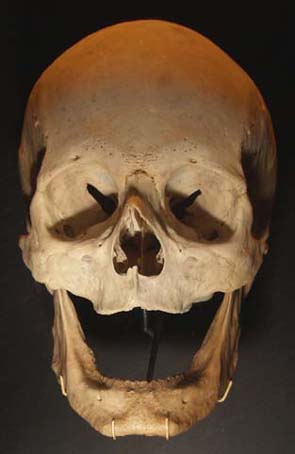
Remember, you only get one set of adult teeth, so take care of them, or you may end up looking like this guy:
Monday, August 8, 2011

Is there something in my teeth?


Tooth decay is the one of the most common diseases in children and adults. Maintaining good oral hygiene during orthodontic treatment is of the utmost importance. It is more difficult to brush and floss around braces, but patients without good oral hygiene during orthodontic treatment put themselves at greater risk of plaque developing around the braces, potentially causing cavities and permanent staining of the teeth.

I recommend brushing after every meal, and if that can't always be accomplished, at least brushing twice a day - after breakfast and before bed. I always tell my patients to see a dentist every 4-6 months. It is especially important to keep up with dental cleanings and exams during orthodontic treatment to keep the hard-to-reach areas clean and maintain healthy teeth and gums. Some people use a small interproximal brush to clean areas that are too small for a regular toothbrush and too large for dental floss.

Flossing can definitely be tricky during orthodontic treatment, but making it a part of a daily routine is essential because flossing will remove plaque between the teeth. Using waxed floss is better than using unwaxed floss because unwaxed floss can fray on the edges of braces bands or brackets. Oral B makes a great product called Superfloss that has a stiff end making it easy to get the floss behind the archwire, a regular section for between the teeth, and a spongy section for wider spaces. My favorite product, however, is the Waterpik Flosser. This is a battery-powered device with a replaceable rubber tip that vibrates to cleanse away plaque, and massages gums to prevent gingivitis. Follow up brushing and flossing with the Waterpik Oral Irrigator, a device that bursts jets of water between teeth and gums to remove food particles and wash away plaque already dislodged by brushing and flossing. You can purchase the Waterpik Flosser and the Oral Irrigator at Aesthetic Orthodontics.

Remember that bacteria feed on sugar, so keeping a well-balanced, healthy diet will also decrease the risk of developing tooth decay. Patients with healthy teeth and gums will have an easier time with braces, making their treatment more enjoyable. At AO, we are always happy to give instruction on how to brush and floss effectively.


Tuesday, July 26, 2011

Embracing Your Braces


Crest and Oral B have created a contest called “Life Opens Up” where people submit videos about how their mouth has helped them open up to the world, and how the world has opened up to them in return. Crest and Oral B created several videos to show people the types stories they are looking for, and our patient, Ruby, was selected to shoot one of these videos because of her story about having braces as an adult. I wasn't able to embed her video in this blog, but check it out here.

Ruby has really conquered the fears and apprehensions about having braces as an adult and exudes the kind of contagious self-confidence that draws people in. We joke about braces being magnetic, but in Ruby’s case, hers really are. Ruby not only found her boyfriend during treatment, she embraced her social life and increased her self-confidence. Since the video was made, Ruby has gotten her braces off and loves her new smile. She is a great example of how patients can make the most of their orthodontic treatment.

If you are worried about having braces, try to take Ruby’s advice: Put yourself out there! Post a couple of pictures of you with your braces. Remember that you are only temporarily in treatment. Thousands of people have braces, and the people who truly care about you will be supportive of your treatment. Braces are becoming trendy as more and more adults are choosing to start orthodontic treatment. Focus on the changes that you see as your treatment progresses, and look forward to the end result. Enjoy your braces while they last and always embrace your smile.

Friday, July 22, 2011

Making Smiles Affordable


Waiting for Guffman has been showing on cable lately, and when I saw this clip, it really got me wondering what goes through my patients' heads when we discuss treatment plans. Choosing to have orthodontic treatment yourself or to provide it for a child is a financial commitment, and in this economy, people are being more selective with expenditures. I truly believe that everyone deserves to have the smile of their dreams, and because of that, we offer fair prices and a number of different payment options to make it easier on my patients and their families.

In addition to honoring several insurance policies and working with our Medi-Cal patients, at Aesthetic Orthodontics, we provide different financing opportunities including a no-interest in-house program. My team and I do everything we can to create a comfortable financial situation for our patients so that we can then do what we do best – give them a perfect smile!

Every once in awhile, I get into a situation where I feel like Corky. Someone comes in desiring orthodontic treatment. An evaluation is made, a number is thrown out, and the patient is unprepared for the overall cost of treatment. Of course, Corky was being completely unreasonable, whereas I propose a price that fits under the bell curve. It isn’t typical when a patient looks at me like I’m an alien, but it can happen because of a few reasons. Either the patient didn’t do any research and imagined that orthodontic treatment would be priced differently, the number was expected but isn’t one that the patient feels financially secure enough to pay, or the patient had self-assessed the issue to be one that is more easily resolved than the exam would then reveal to me. By the end of the conversation, we’ve both explained our positions and come to an agreement on the most comfortable treatment program.

Discussing money and payment is not easy for anyone, but even in an economic downturn, we strive to make orthodontic treatment attainable by creating a financial plan within your means and by offering a large selection of braces products and appliances. If you are considering treatment for yourself or your family, give us a call, schedule a consultation, and at least find out what your options are. I think you’ll be pleasantly surprised at the opportunities available to you.

Monday, June 27, 2011

The Importance of Orthodontic X-Rays


Merely mentioning the word x-ray to my patients can bring up fear, unpleasantry, and an automatic association to cancer and birth defects. Our society is laden with cancer, and because the disease touches all of us in one way or another, we have been inundated with information about preventing various forms of cancer. X-rays are a form of radiation and radiation of any kind can pose a risk to our health, but it is important to realize that radiation has many important and beneficial uses.

X-rays in the practices of dentistry and orthodontics are used to routinely diagnose and treat a number of conditions that could otherwise not be diagnosed properly. At Aesthetic Orthodontics we take x-rays before and after treatment. As an orthodontist, I work not only with teeth, but with the entire dental-facial complex of teeth, bones, lips, joints, sinuses, cartilage, nerves, and muscles. X-rays help me determine if there are underlying structural or alignment issues with the jaw and teeth. They also help me determine in which direction teeth will likely grow or move, and to evaluate the relationship of teeth to other neighboring structures.

Patients usually understand the need for x-rays at the beginning of treatment, but some think that x-rays upon treatment completion are unnecessary. Their teeth are straight and they are happy with their smile, so why do they need to have more x-rays taken? The answer to that is simple. I need to make sure that the bones have developed properly, that the teeth and jaw bones are aligned properly, and that there is nothing further that needs to be done that I may not have been able to detect without the use of an x-ray. X-rays after treatment are also a veritable reference to have if a patient comes in with any issues in the future. I try to make clear to each patient the importance of before and after x-rays before treatment begins.

Understanding the importance of orthodontic x-rays plays a big role in accepting x-ray imaging as part of treatment. However, radiation still leaves patients a bit squeamish. So, just how much radiation are you exposed to? I tell my patients it's like sitting in the sun for ten minutes on a hot day. Radiation is measured in rems, but a rem is a very large unit, so we measure in millirems as well. One thousand millirems equal one rem. At Aesthetic Orthodontics we use ultra-low dose digital imaging. Each x-ray exposes you to less than 0.5 millirems. To put that into perspective, you are exposed to 10 millirems per year cooking with natural gas and 1 millirem - a little more than 2 dental x-rays - for each short flight you take. (perhaps Los Angeles to Las Vegas.) A mammogram exposes each breast to 500 millirems, or the equivalent of 2,000 dental x-rays. I understand the importance of living a healthy lifestyle and avoiding unneccessary risks. At Aesthetic Orthodontics, we do everything we possibly can to ensure that you are getting the lowest dose of radiation to keep you happy and healthy, while still capturing the images and the data we need to make your treatment as successful as possible.

If you need more quantifiable information, listen to the informative podcast below on the risks of dental x-rays by Dr. Sean Carlson, associate professor at my alma mater, the Arthur A. Dugoni School of Dentistry at the University of the Pacific. And as always, if you still have questions or concerns, feel free to contact any one of our offices, or email us at info@aeortho.com