
Tuesday, September 13, 2011
Seven Common Questions Parents Have
The article below was posted on the American Association of Orthodontists website and I think it is a great starting place for parents who are considering orthodontic treatment. The Aesthetic Orthodontics website offers more in-depth information about orthodontic treatment. As always, I invite you and your family to come in for a free consultation to evaluate the treatment options that may be available to you.
Seven Common Questions Parents Have:
Today, nearly four million children in the United States and Canada are receiving treatment from members of the American Association of Orthodontists (AAO). And while parents know that orthodontic treatment results in a healthy, beautiful smile, many don’t realize the important long-term health benefits.
As part of its commitment to education, the AAO provides parents with this list of answers to commonly asked questions about orthodontic care.
1. Why is orthodontic treatment important?
A: Straight teeth and properly aligned jaws contribute to good dental health as well as overall physical health. Orthodontic treatment can boost a person’s self-image as teeth, lips and jaws move into position and improve appearance.
2. How do parents know if their child needs orthodontic treatment?
A: The best way is to visit an orthodontist. The AAO recommends that all children get a check-up with an orthodontist no later than age seven.
3. What if my child still has baby teeth at age seven? Should they still see an orthodontist?
A: Yes. By age 7, enough permanent teeth have arrived for orthodontists to evaluate how the teeth and jaws meet, and to identify current or developing problems. If a problem is detected, the orthodontist and parents can discuss when treatment may be necessary.
4. How does a child’s growth affect orthodontic treatment?
A: Treatment and growth often compliment each other. In some cases, the orthodontist takes advantage of a child’s growth to guide jaws and teeth into their ideal positions.
5. How often do you visit your orthodontist while in orthodontic treatment?
A: Typically a child will see the orthodontist every 6-12 weeks throughout the course of treatment.
6. If you currently don’t have an orthodontist, what is the best way to find someone to treat orthodontic problems?
A: To find an orthodontist near you, ask for a referral from your family dentist, your pediatrician or your child’s school nurse. Or you can visit www.braces.org and click on the Find an Orthodontist service. It is important to choose an orthodontist who is a member of the AAO. Orthodontists receive an additional two to three years of specialized education beyond dental school to learn the proper way to align and straighten teeth. Only those with this formal education may call themselves “orthodontists,” and only orthodontists may be members of the AAO.
7. What is the average cost of orthodontic treatment?
A: Fees will vary, depending on the treatment needed. Most orthodontists offer convenient payment plans, making treatment more affordable than ever. Most orthodontists will work with you to find a plan that fits your family budget. In addition, many patients have dental insurance that includes orthodontic benefits. Check with your employer’s human resources department to learn about your coverage.


Thursday, September 8, 2011
Ice Ice Baby
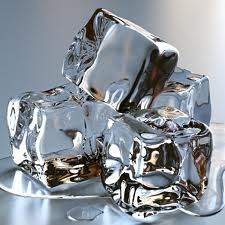
I have to admit, I take pleasure in crunching ice between my teeth from time to time. As I was crunching on a piece this week at lunch, it spurred the idea for this post. Lots of people chew ice, so I scoured the internet for interesting ice-chewing stories. Turns out, there are forums and sites out there for people that are addicted to chewing ice. I don't mean that they make sure they finish all of the ice in their cups at meals or have ice for a snack. These are people who are full-on addicted to chewing ice. Here are some of their stories:
"For me it is icicles. I normally pass by a car lot where they sell cars. Ice forms on the cars and it then runs down on the side forming icicles. I go there deep in the snow so that I can break off the icicles to eat. Someone might think I am trying to break into the cars. I mean look at the icicles here and see how delicious they look, especially the ones on the roofs I have had to break those too often. Sometimes I cut off a huge chunk and then then it is freezing my hand. Now the winter is going and that makes me sad. Now is back tot the coffee house when the cravings get hold of me and I am outside the house:
http://en.wikipedia.org/wiki/Icicles" - murigo
"I have actually purchased a SCOTSMAN MDT2C12 TOUCHFREE CUBELET ICE MAKER/DISPENSER!! (Found on e-bay, paid $2250 for the thing) This is THEE machine that makes SONIC ice. I swear I have this down to a science . . . . If I take out about a pitcher's worth of ice ( and give it to my plants so I'm not "wasting water") then the machine kicks in and starts making that amazing ice that sticks to your teeth . . the really fresh cool stuff. I will literally chew ice until I am shivering, and sometimes I will go to bed with a front toothache that radiates up past my nose and into my forehead. I've actually wrapped in a heating blanket, chewing ice, as I'm watching tv, using the computer, etc. I chew ice when I'm folding laundry, cleaning the windows, polishing the floor, driving, taking a bath . . . it's out of control I know!!! I have 2 chipped molars due to chewing, but my dentist has never lectured me. I know for a fact that I chew over 10 lbs a day because of the amount the ice machine can produce." - chewininco
"Be it from the supermarket or my house I'll eat it anywhere. Once I actually got in trouble with my mum again cuz she caught scraping the excess ice off of the boxes in the ice cream section in the supermarket. The bus stop close to my house is actually right outside a shop that has the most crunchiest and thickest chunks of ice i have seen but it's so irritating i can only get a few pieces in my mouth before the boss sees me and kicks me out, so i make it worth while." - IcE BaBy
Yes, these stories may be funny, be it funny-strange or funny-ha-ha. But, if you take a look at icechewing.com, you'll find that many of these people have pretty significant dental problems, and in some cases, other serious health concerns.
Chewing ice puts an immense amount of pressure on the teeth. While the dentin in your teeth can be flexible, the enamel is hard. In fact, it's the hardest substance in the human body. Putting that much pressure on the enamel can cause fractures in the enamel. Even microscopic fractures created by chewing ice can develop into bigger fractures and cracks in the teeth. If the ice doesn't cause fractures or cracks, chronic ice chewing will still wear down the enamel faster than what is considered normal, and the potential for cavities will be much greater.
Some people chew ice until their gums bleed. This increases risk for infection, gingivitis, and gum recession. If your gums are bleeding due to your chewing, you need to break the habit and you should make an appointment for a dental exam.
Ice chewing is big no-no for braces patients. Aside from potentially damaging teeth, chewing ice can cause brackets to break or come loose, wires to bend inappropriately or come loose and poke patients.
Not only can chewing ice have an impact on your dental health, but it may also be a sign of other health conditions including iron-deficiency anemia, nutritional problems, stress, obsessive-compulsive disorder, and in some younger patients, developmental disorders. Doctors use the term "pica" to describe craving and chewing substances with no nutritional value. If you do experience a need to chew ice or other substances, it might be worth a visit to a doctor just to make sure you are mentally and physically healthy.
If you chew ice chronically, it's in your best interest to break the habit. You might try ordering your drinks with no ice, or drinking only from a straw. If it's the crunch you like, try carrots or celery sticks. The cold rush of that icy crunch isn't worth the cold panic you'll feel when you crack a tooth.
Wednesday, August 17, 2011
A Barbie Girl in a Barbie World

When I think of Barbie, I see her as a cultural icon. Some people see the her as the perfect girl. Barbie has certainly taken a beating with feminists pounding out all of the reasons why Barbie reeks havoc on young women's perceptions of body image. While that may or may not be true, many people, men and women alike, strive for perfection in one way or another, whether it is in their job, their marriage, their sport or hobby, or even their image.
Back in May, I wrote a post about how smiles can sometimes be so perfect that they can look fake. We've all seen these smiles. Smiles that are too white or too even. I always strive to create beautiful, balanced smiles that complement each patient because it is my personal belief that a natural-looking smile is more beautiful than a smile that looks too, well, plastic...or porcelain, as it were. At the end of the day, regardless of whether you look like Barbie or Ken, it's your idiosyncrasies, imperfections, and the most natural aspects of who you are that actually make you perfect.
Monday, August 8, 2011
Is there something in my teeth?
Tooth decay is the one of the most common diseases in children and adults. Maintaining good oral hygiene during orthodontic treatment is of the utmost importance. It is more difficult to brush and floss around braces, but patients without good oral hygiene during orthodontic treatment put themselves at greater risk of plaque developing around the braces, potentially causing cavities and permanent staining of the teeth.
I recommend brushing after every meal, and if that can't always be accomplished, at least brushing twice a day - after breakfast and before bed. I always tell my patients to see a dentist every 4-6 months. It is especially important to keep up with dental cleanings and exams during orthodontic treatment to keep the hard-to-reach areas clean and maintain healthy teeth and gums. Some people use a small interproximal brush to clean areas that are too small for a regular toothbrush and too large for dental floss.
Flossing can definitely be tricky during orthodontic treatment, but making it a part of a daily routine is essential because flossing will remove plaque between the teeth. Using waxed floss is better than using unwaxed floss because unwaxed floss can fray on the edges of braces bands or brackets. Oral B makes a great product called Superfloss that has a stiff end making it easy to get the floss behind the archwire, a regular section for between the teeth, and a spongy section for wider spaces. My favorite product, however, is the Waterpik Flosser. This is a battery-powered device with a replaceable rubber tip that vibrates to cleanse away plaque, and massages gums to prevent gingivitis. Follow up brushing and flossing with the Waterpik Oral Irrigator, a device that bursts jets of water between teeth and gums to remove food particles and wash away plaque already dislodged by brushing and flossing. You can purchase the Waterpik Flosser and the Oral Irrigator at Aesthetic Orthodontics.
Remember that bacteria feed on sugar, so keeping a well-balanced, healthy diet will also decrease the risk of developing tooth decay. Patients with healthy teeth and gums will have an easier time with braces, making their treatment more enjoyable. At AO, we are always happy to give instruction on how to brush and floss effectively.
Tuesday, August 2, 2011
We Like You Too!

Thank you so much to all of the patients, friends, family, colleagues, and local businesses that have engaged and interacted with Aesthetic Orthodontics via social media!
For the past few months, my team and I have been focusing on creating a better online presence through social media. We have been working at creating a sense of community and getting our patients involved by having Facebook challenges and competitions and consistently interacting via Twitter. Additionally, we have been starting to update our online profiles, such as Google Places, to reflect our new logo and contain the most current information about our offices and promotions.

The response that we have received, especially over Facebook, has been extremely rewarding. This week, we hit a milestone with our 1000th like and are excited about reaching out to our patients and friends to get our next thousand.
If you are a patient, friend, business associate, or just interested in Aesthetic Orthodontics, take a moment to like us on Facebook or follow us on Twitter. You'll get a better sense of who we are as a practice. Thanks for all your support. If you have any questions or suggestions, I am always open to hearing them.
Tuesday, July 26, 2011
Embracing Your Braces

Crest and Oral B have created a contest called “Life Opens Up” where people submit videos about how their mouth has helped them open up to the world, and how the world has opened up to them in return. Crest and Oral B created several videos to show people the types stories they are looking for, and our patient, Ruby, was selected to shoot one of these videos because of her story about having braces as an adult. I wasn't able to embed her video in this blog, but check it out here.
Ruby has really conquered the fears and apprehensions about having braces as an adult and exudes the kind of contagious self-confidence that draws people in. We joke about braces being magnetic, but in Ruby’s case, hers really are. Ruby not only found her boyfriend during treatment, she embraced her social life and increased her self-confidence. Since the video was made, Ruby has gotten her braces off and loves her new smile. She is a great example of how patients can make the most of their orthodontic treatment.
If you are worried about having braces, try to take Ruby’s advice: Put yourself out there! Post a couple of pictures of you with your braces. Remember that you are only temporarily in treatment. Thousands of people have braces, and the people who truly care about you will be supportive of your treatment. Braces are becoming trendy as more and more adults are choosing to start orthodontic treatment. Focus on the changes that you see as your treatment progresses, and look forward to the end result. Enjoy your braces while they last and always embrace your smile.
Friday, July 22, 2011
Making Smiles Affordable
Waiting for Guffman has been showing on cable lately, and when I saw this clip, it really got me wondering what goes through my patients' heads when we discuss treatment plans. Choosing to have orthodontic treatment yourself or to provide it for a child is a financial commitment, and in this economy, people are being more selective with expenditures. I truly believe that everyone deserves to have the smile of their dreams, and because of that, we offer fair prices and a number of different payment options to make it easier on my patients and their families.
In addition to honoring several insurance policies and working with our Medi-Cal patients, at Aesthetic Orthodontics, we provide different financing opportunities including a no-interest in-house program. My team and I do everything we can to create a comfortable financial situation for our patients so that we can then do what we do best – give them a perfect smile!
Every once in awhile, I get into a situation where I feel like Corky. Someone comes in desiring orthodontic treatment. An evaluation is made, a number is thrown out, and the patient is unprepared for the overall cost of treatment. Of course, Corky was being completely unreasonable, whereas I propose a price that fits under the bell curve. It isn’t typical when a patient looks at me like I’m an alien, but it can happen because of a few reasons. Either the patient didn’t do any research and imagined that orthodontic treatment would be priced differently, the number was expected but isn’t one that the patient feels financially secure enough to pay, or the patient had self-assessed the issue to be one that is more easily resolved than the exam would then reveal to me. By the end of the conversation, we’ve both explained our positions and come to an agreement on the most comfortable treatment program.
Discussing money and payment is not easy for anyone, but even in an economic downturn, we strive to make orthodontic treatment attainable by creating a financial plan within your means and by offering a large selection of braces products and appliances. If you are considering treatment for yourself or your family, give us a call, schedule a consultation, and at least find out what your options are. I think you’ll be pleasantly surprised at the opportunities available to you.
Subscribe to:
Posts (Atom)